

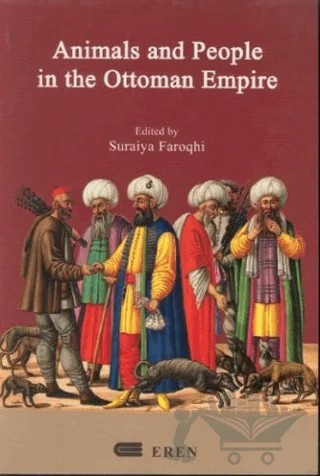
Animals And People İn The Ottoman Empire

%8 İNDİRİM • %8 İNDİRİM • %8 İNDİRİM • %8 İNDİRİM •
Yazar:Kolektif
Yaklaşık 1-3 iş gününde temin
Barkod:9789756372432
ISBN:9789756372432
Sayfa Sayısı:475 Sayfa
Ürün Ebatı:16x24 cm
Dil:Türkçe
Cilt Durumu:Ciltsiz
Kağıt Tipi:1. Hamur
Baskı Sayısı:1
Basım Tarihi:11/2010
21 görüntülenme
Bu kitapta 1.380 Nobel Puan kazanın
Sepet tutarı 1000 ₺ ve üzeri
siparişlerinizde kargo ücretsiz!
Kitap Hakkında
Similarly to members of other pre-industrial and industrial societies, the subjects of the Ottoman sultans depended on the animals they raised and whether they liked it or not, certain non-domestic animals sharing their home environments had a profound impact on their lives as well.Numerous topics await discussion: quite apart from milk, yoghurt and cheese, honey was in great demand, as it was one of the principal sweeteners in a world where sweet foods were popular yet cane sugar was scarce and expensive. Bee-keeping was therefore a common activity in Anatolian, Balkan and Syrian villages. For clothing and the outfitting of dwellings, animals also were indispensable: the wool from local sheep served to make cloaks and vests of different qualities, to say nothing of the kelims and carpets that made the reputation of towns like Uşak or Gördes in western Anatolia.Animals were also the principal source of motor energy: in many places horses drove the mills where the inhabitants ground their flour. Most importantly, animals were indispensable to peasants as oxen drew the plough. Throughout Anatolia moreover, ox-drawn carts were common; and in eighteenth- and nineteenth century Istanbul, women often went to the picnic grounds surrounding the city in such conveyances, gaily decorated for the occasion. In a less peaceful vein, before the late 1700s most gunpowder was also a product of horse-driven mills.Well-to-do travellers, but also the Ottoman court and army made extensive use of horses. The sultans rapid conquest of south-eastern and a sizeable chunk of central Europe would have been impossible without the famous cavalry of sipahis. Fine horses were a source of prestige, and expensive: to celebrate these prized possessions their owners often spent a great deal of money on saddles, saddlecloth and bridles.Ottoman dignitaries also typically went hunting on horseback; and in this case they made extensive use of different birds of prey, some taken as nestlings and others c...
Benzer ürünler
Bu kitaba yakın başlık ve konularda öne çıkanlar; kategori ve yayınevine göre de sıralanır — keşfetmeniz için seçildi.

%8
Turkey and Europe in History
Halil İnalcık
322.00₺350.00₺

%8
Fifteenth Century Ottoman Realities
Heath W. Lowry
552.00₺600.00₺

%8
James Robertson Pioneer of Photography in The Ottoman Empire
Bahattin Öztuncay
552.00₺600.00₺

%8
Essays In Ottoman History
Halil İnalcık
460.00₺500.00₺

%8
Redefining the Nation State and Citizen
Gül Tokay
322.00₺350.00₺

%8
The Seismicity of Turkey and Adjacent Areas, A Historical Review, 1500-1800
C. F. Finkel, N. N. Ambraseys
368.00₺400.00₺

%8
Balkans : History and Historiography
Fikret Adanır
368.00₺400.00₺

%8
The Turkish Hayat House
Doğan Kuban
1472.00₺1600.00₺

%8
The Egyptian Question (1831-1841)
Muhammed H. Kutluoğlu
368.00₺400.00₺

%8
Kilims Museum of Turkish And Islamic Arts
Nazan Ölçer
460.00₺500.00₺

%13
The Princess And The Frog
Anonim
87.00₺100.00₺

%13
The Prince and the Pauper
Mark Twaın
95.70₺110.00₺
Kolektif — diğer kitapları
Aynı yazara ait diğer eserler; çok satanlar öne alındı.

%15
Çanta Boy Termo Cilt Kur'an-ı Kerim (Taba Renk)
Kolektif
749.70₺882.00₺

%15
1. Sınıf Akıllı Damla Tüm Dersler Yaprak Testler
Kolektif
10.63₺12.50₺

%20
Hidayet Önderleri 1 - Hz. Muhammed Mustafa
Kolektif
400.00₺500.00₺

8. Sınıf Bloktest 1. Dönem T.C. İnkılap Tarihi ve Atatürkçülük 10x20 Kazanım Pekiştirme Denemeleri Seti
Kolektif
25.00₺

%8
2020 KPSS Eğitim Bilimleri Tamamı Çözümlü Modüler Soru Bankası - Eğitim Bilimleri Rehberlik ve Özel Eğitim
Kolektif
34.04₺37.00₺

Yaz Kuran Kursları Yaprak Test 3. Kur
Kolektif
30.00₺

6. Sınıf Matematik Süperstart Soru Bankası
Kolektif
50.00₺

7. Sınıf Fen Bilgisi Süper İnova Soru Bankası
Kolektif
165.00₺

%13
Hz. Peygamberden İktibaslar 2 - Enli Hadisler
Kolektif
56.55₺65.00₺

8. Sınıf Bloktest 1. Dönem Matematik 10x20 Kazanım Pekiştirme Denemeleri Seti
Kolektif
25.00₺

%15
Orta Boy Kur'an-ı Kerim (Resm-i Osmani) (Yeşil Renk)
Kolektif
457.30₺538.00₺

6. Sınıf İngilizce Kılavuz Deneme
Kolektif
290.00₺
1500.00₺
1380.00₺
1