

The Cross in Ritual Architecture and Art

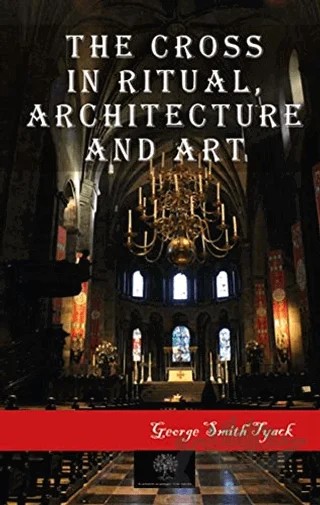
Yazar:George Smith Tyack
Stokta Yok
Bu kitapta 189 Nobel Puan kazanın
Sepet tutarı 1000 ₺ ve üzeri
siparişlerinizde kargo ücretsiz!
Kitap Hakkında
"It is strange, y yet unquestionably a fact, that in ages long before the birth of Christ, and since then in lands untouched by the teaching of the Church, the Cross has been used as a sacred symbol. The Ar yan tribes, ancestors of most of the European nations, so regarded a cross of curious form, whose four equal arms were all turned midway at a right angle. The excavations of Dr. Schliemann on the site of ancient Troy have brought to light discs of baked clay stamped with a cross. It is well known that the crux ansata, or Tau Cross (T), sometimes with the addition of a ring, as if for suspension, at the top, is found in Egyptian inscriptions. The Greek Bacchus, the Tyrian Tammuz, the Chaldean Bel, and the Norse Odin, were all symbolized to their votaries by a cruciform device. The Spanish conquerors of Mexico found the cross already an object of reverence among the Aztecs, car ved on temple walls, on amulets, and on potter y ; so, too, in North America, specimens of shell-work, engraved with crosses of various forms, have been unearthed from mounds raised by the native Indian tribes."
Benzer ürünler
Bu kitaba yakın başlık ve konularda öne çıkanlar; kategori ve yayınevine göre de sıralanır — keşfetmeniz için seçildi.

Mimarlığı Görebilmek
Bruno Zevi

Park Otel Olayı
Remzi Gökdağ
Mimarlıkta Dijitalleşme ve Sanal Gerçeklik Tartışmaları

Old St. Paul's Cathedral
William Benham

İLK - Geçmişten Geleceğe STFA
Tunç Tayanç

Italian Villas and Their Gardens
Edith Wharton

Mimarlık Planlama ve Tasarı'mda Akademik Araştırmalar
Kolektif

Bitkilendirme Tasarımı
Ahmet Cengiz Yıldızcı

Ağacın İzinde
Genco Berkin

Sözlü Tarih Yöntemiyle Türkiye’de Mobilya ve İçmimarlık Tarihini Okumak: Sadun Ersin
Deniz Hasırcı, Zeynep Tuna Ultav, Melis Örnekoğlu Selçuk

Almanak - Almanac
Kolektif

Beyond Green Buildings: Exploring Long - Term Environmenta Ethics in
Hüseyin Zülfikar, Mahsa Hakkı
